14 January
The Vanishing Fisherman
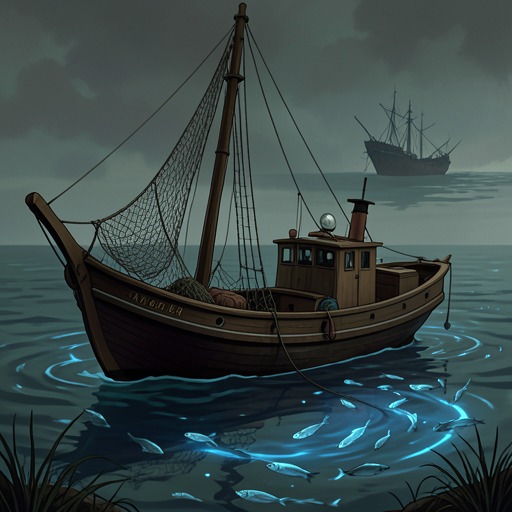
Off [Huanchaco](entity:location-recall-location-huanchaco-d509d5173262), [Juan Narciso Ucañan](entity:character-recall-character-juan-narciso-uca-an-c60eab39333f) leaves the shore alone in his reed boat, driven farther from the village by dwindling catches and the collapse of traditional fishing. He hopes to bring home enough fish to sustain his ailing father and refuses to abandon the life his family has lived for generations.
A huge shoal gathers beneath him. Something rises through the fish, and Ucañan disappears without anyone noticing. His boat is later found adrift, an early, unexplained loss that will prove part of a global pattern.
4 March
The Worms from the Slope
At the [Norwegian continental slope](entity:location-recall-location-3e1f216342b4), [Statoil](entity:organization-recall-organization-statoil-29e6c247ae4c) retrieves unusually large bristleworms from seven hundred metres down. [Tina Lund](entity:character-recall-character-tina-lund-1d10383e7a05) brings specimens to [Sigur Johanson](entity:character-recall-character-sigur-johanson-775db358c12b), whose examination suggests an organism with the features of more than one kind of worm and jaws too powerful for the presumed diet.
[Johanson](entity:character-recall-character-johanson-eba0132cf775) warns that the worms may have arrived only recently and could be associated with methane hydrates. [Lund](entity:character-recall-character-lund-d3b604f2ca94) tells him that the seabed is covered with millions of them, turning an odd specimen into an urgent ecological puzzle.
12 March
The Missing Whales
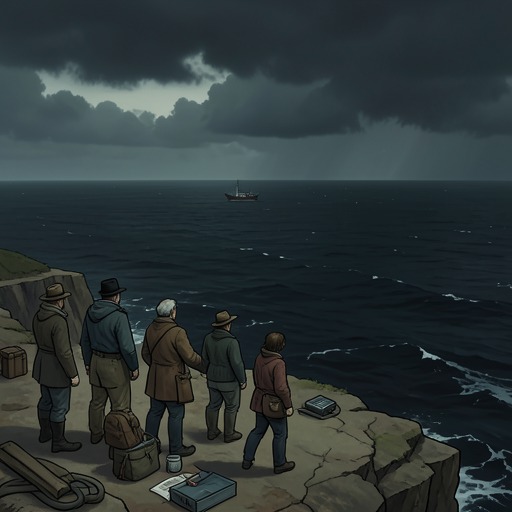
On [Vancouver Island](entity:location-recall-location-vancouver-island-38f3768a6466), [Leon Anawak](entity:character-recall-character-leon-anawak-079a9f3df79c) takes tourists out from [Tofino](entity:location-recall-location-tofino-2a02f48687e7) but finds no migrating whales where they should be. The missing animals trouble him more than the disappointed passengers: tags have stopped transmitting, and the usual seasonal passage has gone quiet.
On the beach he meets [Samantha Crowe](entity:character-recall-character-samantha-crowe-055aa0cf35ec), a [SETI](entity:organization-recall-organization-seti-a1519229466a) researcher also searching for signs of intelligent life. Their conversation connects her search across the stars with his work among marine mammals and introduces the possibility that intelligence might be found somewhere closer than either expects.
12 March
A Search for Meaning
Over dinner, [Crowe](entity:character-recall-character-crowe-5f5bf00d4efd) explains that [SETI](entity:organization-recall-organization-seti-a1519229466a) listens to distant stars for signals that might indicate another civilisation. She has never received a confirmed message, but remains committed to the search despite its vast uncertainties.
Anawak recognises that both of them are seeking more than evidence: they want to understand what another intelligence would mean for humanity. Their exchange establishes a central question of the novel—whether people can recognise a mind that does not resemble their own.
13 March
Millions of Worms
[Johanson](entity:character-recall-character-johanson-eba0132cf775) joins [Lund](entity:character-recall-character-lund-d3b604f2ca94) and her new partner, [Kare Sverdrup](entity:character-recall-character-kare-sverdrup-0445d0f30021), aboard the research vessel [Thorvaldson](entity:object-recall-object-thorvaldson-b471ee7f8259). A remotely operated vehicle descends to the slope and reveals immense mats of pink worms covering methane hydrates, far beyond the scale of the original specimens.
The robot also records a vast, luminous shape that vanishes from its lights. The worms and the unidentified creature deepen the mystery, while [Statoil](entity:organization-recall-organization-statoil-29e6c247ae4c)’s interest in automated deep-sea production raises the stakes of disturbing an ecosystem no one fully understands.
13 March
The Shape in the Darkness
After reviewing the footage from the slope, [Johanson](entity:character-recall-character-johanson-eba0132cf775) and [Lund](entity:character-recall-character-lund-d3b604f2ca94) can make out a faint blue glow and pale markings on a creature that moves too quickly to identify. A giant squid is one possibility, but its size and location make that explanation doubtful.
The unknown form connects the worms’ appearance with a larger disturbance in the deep. Johanson remains cautious, but the images make it harder to dismiss the idea that something unusual is active beyond the reach of ordinary observation.
18 March
The Beluga Mark Test
At [Vancouver Aquarium](entity:location-recall-location-d5a30cd68d2c), Anawak watches a beluga inspect a coloured mark on its body using a mirror. He argues that the animal recognises itself, but a student challenges the leap from self-recognition to human-like understanding.
The debate sharpens Anawak’s own caution about projecting human ideas onto animals. His research is important to him, yet he must ask what the test actually demonstrates—and how much remains unknowable about another species’ mind.
18 March
Greywolf’s Challenge
At the aquarium, [Jack Greywolf](entity:character-recall-character-jack-greywolf-de7cc4d6bc26) confronts Anawak and urges him to join the Seaguards’ opposition to whale-watching. Anawak rejects the demand and attacks [Greywolf](entity:character-recall-character-greywolf-21b783123cad)’s assumed identity, exposing the resentment and unresolved questions beneath their past friendship.
Greywolf leaves Anawak with a sharper challenge: why has Anawak distanced himself from his own people? The argument awakens a conflict over identity and belonging that will become increasingly difficult for Anawak to evade.
The following morning in March
The Humpbacks Return
Alone in his Zodiac, Anawak finally finds two humpback whales. They rise beside his boat and stare at him for an unusually long time, seeming to study him before disappearing when he lifts his camera.
The encounter brings relief that the whales have returned, but also unease. Anawak cannot tell whether the animals are curious, frightened, or responding to something he cannot perceive.
5 April
Whales Under Observation
Whale-watching resumes as migrants return to the waters off [Tofino](entity:location-recall-location-tofino-2a02f48687e7). Anawak is relieved, though he remains troubled by the whales’ earlier disappearance and by his sense that they were examining him rather than behaving normally.
During a tour, humpbacks feed near the boats in a vivid display. Their behaviour looks ordinary to the tourists, but Anawak continues watching for signs that the returning animals have changed.
5 April
The Barrier Queen’s Rudder
[Clive Roberts](entity:character-recall-character-clive-roberts-facae05abb83) asks Anawak to investigate the freighter [Barrier Queen](entity:object-recall-object-barrier-queen-fc8ed75e2173) after its rudder jams and a rescue tug is lost. Diving beneath the vessel, Anawak finds a massive growth of mussels on the rudder, propeller, and keel—an infestation too extensive to explain as ordinary fouling.
When he cuts into the growth, a strange, elastic, faintly luminous substance bursts out. The discovery links a ship’s mechanical failure to the unexplained glowing organism and suggests that marine life is acting in coordinated, destructive ways.
6 April
Geomar’s Worm Experiment
In [Kiel](entity:location-recall-location-7b7735cfe1f3), [Johanson](entity:character-recall-character-johanson-eba0132cf775) takes the worms to the deep-sea simulation chamber at [GEOMAR Centre](entity:organization-recall-organization-geomar-centre-e688d4f59907). Tests show that worms burrow into hydrate ice and die after reaching the gas beneath it, even though their bacteria-rich bodies seem adapted to feed without hunting.
The experiment reveals a disturbing contradiction: the worms are equipped to bore into hydrate, but their behaviour appears self-destructive. Johanson and the researchers still do not know what drives them or how extensive the danger may be.
11 April
Genghis’s Autopsy
Anawak joins an autopsy of the dead orca Genghis on a [Vancouver Island](entity:location-recall-location-vancouver-island-38f3768a6466) beach. The whale appears to have died from infection, part of a pattern of weakened immunity among marine mammals exposed to industrial pollutants.
[Sue Oliviera](entity:character-recall-character-sue-oliviera-278c084b3c19) also reports that the unusual mussels from the [Barrier Queen](entity:object-recall-object-barrier-queen-fc8ed75e2173) move under their own power and that the elastic tissue Anawak recovered resembles the substance found in the whale’s body. The evidence now links ship infestations, whale deaths, and an unknown organism.
11 April
The Tofino Whale Attack
While Anawak is away, whales attack boats in [Clayoquot Sound](entity:location-recall-location-bb11b9d5dc43), smashing the [Lady Wexham](entity:object-recall-object-lady-wexham-df557853ee7c) and overturning the [Blue Shark](entity:object-recall-object-blue-shark-1e85e1d77ad2). [Orcas](entity:creature-recall-creature-59c775896057) attack swimmers, killing [Susan Stringer](entity:character-recall-character-susan-stringer-e67b5744eb62) and other passengers; [Greywolf](entity:character-recall-character-greywolf-21b783123cad) risks his life to pull survivors aboard.
Anawak and the other survivors return to [Tofino](entity:location-recall-location-tofino-2a02f48687e7) in shock. The attack destroys the assumption that whales are harmless around people and turns a troubling behavioural anomaly into an immediate human catastrophe.
11 April
The Rescue of the Lady Wexham
After the initial attack, Anawak, [Greywolf](entity:character-recall-character-greywolf-21b783123cad), and [Tom Shoemaker](entity:character-recall-character-tom-shoemaker-d08a48bd9bee) return to the sinking [Lady Wexham](entity:object-recall-object-lady-wexham-df557853ee7c) to rescue its passengers. Grey whales and orcas attack again, but two resident grey whales drive the attackers away long enough for the survivors to be pulled aboard.
The rescue saves many lives but does not explain why the migratory whales are attacking. Anawak’s distinction between resident and transient animals becomes an important clue to the changing behaviour.
12 April
The Geomar Warnings
[Johanson](entity:character-recall-character-johanson-eba0132cf775) presents the worms’ behaviour to [Statoil](entity:organization-recall-organization-statoil-29e6c247ae4c) managers and recommends pausing the subsea project until Geomar can examine the site. He argues that the danger lies not just in the visible worms but in the unknown role they may play in destabilising methane hydrates.
Statoil agrees to further investigation, while Johanson is drawn deeper into the project. On a weekend at his lake house, he and [Lund](entity:character-recall-character-lund-d3b604f2ca94) acknowledge their affection but choose not to become lovers, preserving their friendship as Lund commits to [Kare Sverdrup](entity:character-recall-character-kare-sverdrup-0445d0f30021).
Mid-April
The First Global Anomalies
Reports of missing boats, jellyfish invasions, shipping accidents, and marine attacks begin to emerge from regions far beyond the Norwegian slope and [Vancouver Island](entity:location-recall-location-vancouver-island-38f3768a6466). The incidents are often downplayed or reported separately, leaving no clear explanation for their growing frequency.
[Johanson](entity:character-recall-character-johanson-eba0132cf775) starts to suspect that the phenomena are connected. The possibility that they are manifestations of one organised process remains difficult to accept, but the scale and timing of the events make coincidence less convincing.
Mid-April
The Lobster Explodes
At the [Troisgros restaurant in Roanne](entity:location-recall-location-665c87d2d3ad), chef [Jean Jérôme](entity:character-recall-character-jean-j-r-me-e04c9f2e4d2f) finds that a [Brittany](entity:location-recall-location-66c17c26ffa8) lobster has burst apart, leaving a strange jelly where its flesh should be. The apprentice saves a sample, but the contaminated material is later discarded into the wastewater system.
Jérôme becomes gravely ill and dies. [Bernard Roche](entity:character-recall-character-bernard-roche-b45d59550bb1) examines the sample and finds a highly aggressive organism resembling [Pfiesteria](entity:creature-recall-creature-pfiesteria-495a3951a64e), revealing that the marine anomalies can reach people through food and water.
18 April
The Whale Attack Footage
With whale-watching closed along much of the Pacific coast, Anawak and [Alicia Delaware](entity:character-recall-character-alicia-delaware-cf3d52b5e594) sift through tracking data and video from the [Lady Wexham](entity:object-recall-object-lady-wexham-df557853ee7c) disaster. They identify attackers as migratory whales, while resident animals appear not to participate.
The evidence points toward a change that has occurred away from the coast, perhaps during migration. The footage offers the team a rare chance to identify individuals and trace their movements rather than relying on rumour or incomplete reports.
20 April
Roche Identifies the Algae
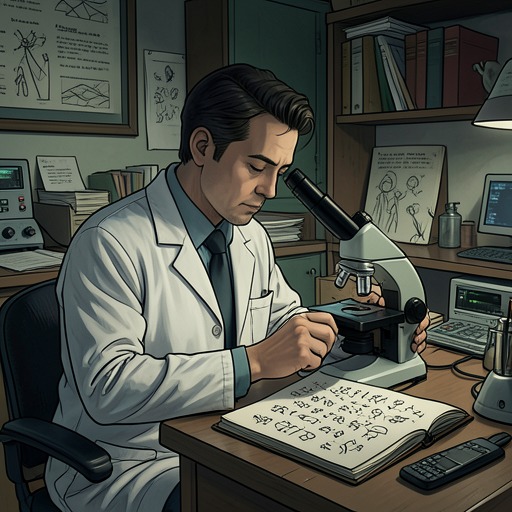
In [Lyon](entity:location-recall-location-4db8e3479b49), [Bernard Roche](entity:character-recall-character-bernard-roche-b45d59550bb1) examines the material preserved from the lobster incident. Under a microscope, he sees organisms attack and drain human blood cells, leading him to identify a dangerous [Pfiesteria](entity:creature-recall-creature-pfiesteria-495a3951a64e)-like pathogen.
[Roche](entity:character-recall-character-roche-06ef505bb08b) realises that contaminated lobsters may have carried the agent into water systems. The potential threat now reaches beyond marine animals: an organism from the sea may be able to spread through drinking water and cause a human epidemic.
22 April
The Slope Survey
The research vessel Sonne surveys the Norwegian continental margin alongside [Thorvaldson](entity:object-recall-object-thorvaldson-b471ee7f8259). Water samples reveal exceptionally high methane levels, and the researchers find evidence that hydrate deposits may be destabilising even though measured pressure and temperature have not changed.
[Statoil](entity:organization-recall-organization-statoil-29e6c247ae4c)’s [Clifford Stone](entity:character-recall-character-clifford-stone-e8c48c08329d) dismisses the warning, but the scientists continue their investigation. Their observations indicate that the worm problem may extend much farther along the slope than anyone had initially believed.
22 April
The Sonne Blowout
A video-guided grab sent to the seabed penetrates a weakened hydrate layer and triggers a massive methane blowout. The rising equipment swings across the deck and kills a technician, while the vessel races away from the eruption.
The accident confirms that the slope’s stability is in question and that methane escaping from the seabed can threaten ships. The dead worms and bacterial material recovered from the grab point toward a destructive process beneath the visible surface.
Late April
Bauer’s Missing Expedition
[Johanson](entity:character-recall-character-johanson-eba0132cf775) contacts scientists around the world and learns from [Lukas Bauer](entity:character-recall-character-lukas-bauer-5c2403fc1a04) that methane levels in the [Greenland Sea](entity:location-recall-location-greenland-sea-b232002fc9ab) are abnormally high and that the deep-water currents are behaving strangely. Bauer’s research vessel [Juno](entity:object-recall-object-juno-63f0595754b0) later sinks during a methane blowout.
[Karen Weaver](entity:character-recall-character-karen-weaver-dc1a08078744), who had been working with Bauer, is left with his data and his unfinished warnings. The loss connects the methane instability to the disruption of the ocean’s global circulation.
26 April
The Bacterial Conveyor
In [Kiel](entity:location-recall-location-7b7735cfe1f3), [Erwin Suess](entity:character-recall-character-erwin-suess-c418ab627508) and his colleagues combine simulator results with the samples from the slope. They discover that the worms transport communities of bacteria into the hydrate layers, where the microbes break down the ice and release methane.
The worms are not the main agents of destruction; they are carriers for a microbial process that spreads through the seabed. This insight explains how the apparently small organisms could help destabilise an immense geological structure.
Late April
Stone’s Hidden Prototype
[Statoil](entity:organization-recall-organization-statoil-29e6c247ae4c) executives discover that [Clifford Stone](entity:character-recall-character-clifford-stone-e8c48c08329d) concealed earlier reports of worms near the Kongsberg subsea prototype. He had approved construction despite evidence of methane and an unidentified organism at the site.
The company suspends Stone and asks [Johanson](entity:character-recall-character-johanson-eba0132cf775) to coordinate the investigation. Johanson realises that commercial interests and scientific uncertainty have already combined to conceal a serious risk.
Late April
The Plane and the Tag
Anawak, Delaware, a pilot, and an army marksman attempt to tag a whale from a [DHC-2 Beaver](entity:object-recall-object-dhc-2-beaver-750e149587e8) while the [URA](entity:object-recall-object-ura-51df9705c4db) tracks the animal underwater. The tag reaches its target, but a whale breaches into the aircraft, killing the pilot and [Danny](entity:character-recall-character-danny-318bc697472f) and injuring Anawak and Delaware.
The URA survives and follows the whales, giving the researchers a rare continuous record of their movement and sounds. The mission’s cost deepens Anawak’s grief and raises the stakes of understanding what is controlling the attacks.
Late April
The Light in the Whales
The [URA](entity:object-recall-object-ura-51df9705c4db)’s recordings show a blue luminous cloud approaching a pod of whales. Whip-like flashes strike individual animals, including [Lucy](entity:character-recall-character-lucy-680a57cd8fba), after an intense low-frequency signal sounds.
The scientists conclude that the cloud is connected to the whales’ changed behaviour, though they cannot identify what it is or how it acts. Its presence suggests that the attacks may be induced rather than a spontaneous outbreak of animal aggression.
Late April
Anawak and the Nuu-chah-nulth
Anawak seeks advice from [George Frank](entity:character-recall-character-george-frank-a9844e154b3a), a Nuu-chah-nulth chief, and hears the teaching [Hishuk ish ts’awalk](entity:rule-recall-rule-hishuk-ish-ts-awalk-aa184436467d): everything is one. Frank argues that the whales’ world cannot be separated from human actions that poison, disrupt, and exploit the sea.
The conversation forces Anawak to consider that the whales may be only the visible part of a larger problem. It also prepares him to confront his own disconnection from his Inuit identity.
Late April
Anawak Thanks Greywolf
Anawak visits [Greywolf](entity:character-recall-character-greywolf-21b783123cad) to thank him for rescuing the survivors of the [Lady Wexham](entity:object-recall-object-lady-wexham-df557853ee7c). Their conversation turns into an argument about identity, responsibility, and the parts of themselves they have tried to reject.
Greywolf challenges Anawak for abandoning his people, while Anawak challenges Greywolf’s chosen identity and activism. The confrontation ends with a more honest friendship between them, giving Anawak a reason to stop hiding from difficult connections.
30 April
The Storegga Collapse
At the [Norwegian continental slope](entity:location-recall-location-3e1f216342b4), methane hydrates fail across a vast area. Worms and bacteria have destabilised the deposits, and the seabed begins to slide in a chain reaction that pulls platforms and pipelines into the depths.
The collapse generates a tsunami. The research vessels flee toward deeper water, while warnings are sent to governments along the surrounding coasts.
30 April
The North Sea Tsunami
A towering tsunami strikes the [North Sea](entity:location-recall-location-north-sea-960ca89fc319)’s platforms and coastal settlements, destroying the offshore industry and devastating cities including [Stavanger](entity:location-recall-location-b5fd8cb68930) and [Trondheim](entity:location-recall-location-trondheim-90daa64842cd). The wave rushes into fjords, rivers, and low-lying towns, killing vast numbers of people.
[Johanson](entity:character-recall-character-johanson-eba0132cf775) and Weaver escape in a helicopter, while [Tina Lund](entity:character-recall-character-tina-lund-1d10383e7a05) is killed near [Sveggesundet](entity:location-recall-location-5cb49982ae3d). The catastrophe establishes the scale of the threat and leaves Johanson haunted by the deaths he could not prevent.
30 April, hours after the first slide
The Second Slope Collapse
After the first tsunami has swept across the region, the northern part of the destabilised slope also collapses. The disaster damages coastal infrastructure and severs major transatlantic communications cables.
With internet and telephone links failing, emergency services and governments lose the ability to coordinate across the Atlantic. The catastrophe is no longer only a regional disaster: it is disrupting the networks on which modern society depends.
10 May
The Chateau Summit
Scientists, intelligence officials, and diplomats gather at [Chateau Whistler](entity:location-recall-location-chateau-whistler-9ae97acfcfee) under [Judith Li](entity:character-recall-character-judith-li-122bb3689b38)’s leadership. Major Peak presents evidence of whale attacks, abnormal fish behaviour, toxic jellyfish, mussels, shipping disasters, methane blowouts, and the European tsunami.
[Jack Vanderbilt](entity:character-recall-character-jack-vanderbilt-4a82df7a0905) argues that a human adversary may be orchestrating a campaign against the West, while [Johanson](entity:character-recall-character-johanson-eba0132cf775) and others see no human explanation capable of accounting for the scale and biological specificity of the events.
10 May
The Pfiesteria Crisis
[Bernard Roche](entity:character-recall-character-bernard-roche-b45d59550bb1) explains that a highly toxic [Pfiesteria](entity:creature-recall-creature-pfiesteria-495a3951a64e)-like organism is spreading through contaminated water and crustaceans in [Europe](entity:location-recall-location-europe-90be8cc79c46). The pathogen has caused thousands of deaths and appears difficult to remove once it enters the water system.
The outbreak links marine pollution and industrial agriculture to a new biological threat, while the possibility of an even more dangerous strain raises the stakes for North America.
10 May
Long Island’s White Crabs
Eyeless white crabs emerge along [Long Island](entity:location-recall-location-long-island-f692f10da472)’s coast in vast numbers. A newly married couple encounter the swarm near [Montauk](entity:location-recall-location-montauk-3d0962a03bb4) and flee naked from the advancing mass as the crabs overrun the shore and roads.
Satellite operators trace the invasion toward New York. The crabs appear to be carriers for a toxic organism, turning a coastal wildlife anomaly into a direct threat to a major city.
11 May
New York’s Water Poisoning
[Crabs](entity:creature-recall-creature-ac4c90b72064) and contaminated organic matter are carried into the city’s drainage system through vehicles washed after the [Long Island](entity:location-recall-location-long-island-f692f10da472) invasion. The material spreads through New York’s water network, and the first victims begin to fall ill within hours.
The pathogen reaches homes, hospitals, and public buildings. New York’s infrastructure becomes a vector for an epidemic that authorities cannot easily contain or treat.
11–12 May
New York Under Quarantine
The [U.S.](entity:location-recall-location-5d55e9152db1) military seals off Greater New York as people collapse from the spreading toxin. Hospitals are overwhelmed, ambulances race through contaminated streets, and the [Queens Midtown Tunnel](entity:location-recall-location-d71293ba4743) becomes a deadly fire trap.
[Salomon Peak](entity:character-recall-character-salomon-peak-52ef52162138) and the emergency teams can evacuate some healthy residents, but they have no cure and cannot safely restore the city’s water supply. The crisis demonstrates how quickly a biological attack can overwhelm even a well-prepared metropolis.
10 May
The Hidden Yrr Hypothesis
At the Chateau summit, [Johanson](entity:character-recall-character-johanson-eba0132cf775) rejects both natural coincidence and the terrorism theory. He argues that the attacks may come from an intelligent species inhabiting the deep sea, a civilisation whose technology is biological rather than mechanical.
His hypothesis reframes the scattered anomalies as parts of a single conflict between humanity and another terrestrial intelligence. Li listens closely, while Vanderbilt rejects the idea as fantasy.
14 May
The Anawak Homecoming
After learning that his father has died, Anawak returns to [Nunavut](entity:location-recall-location-efb603217926) and reaches [Cape Dorset](entity:location-recall-location-cape-dorset-31b544adf2a8) after years away. His uncle, [Ijitsineq Akesuk](entity:character-recall-character-ijitsineq-akesuk-303fbc5e492e), welcomes him, but Anawak initially resists staying with the family or revisiting the world he left behind.
The journey confronts him with the history of forced relocation, cultural loss, and his father’s decline. His return begins a gradual reconsideration of where he belongs and what he has rejected.
Mid-May
Akesuk’s Teaching
Akesuk takes Anawak onto the land, where the Inuit’s flexible sense of time and dependence on natural conditions contrast with the human urge to control and schedule everything. The trip becomes a lesson in living within, rather than above, the environment.
At the floe-edge, Akesuk tells Anawak that the Inuit were forced from their traditional lives and that their culture is still recovering from that rupture. He urges Anawak to understand the sea beings as part of the same world rather than enemies to be conquered.
Mid-May
The Bird Spirit
Akesuk gives Anawak a carving of a bird spirit and tells him that it may help guide his thoughts. He explains that the image is connected to consciousness and to the ability to see beyond ordinary perception.
Anawak also hears the story of Sedna, the sea spirit whose body became the source of whales and seals. The stories do not provide scientific answers, but they give him a different framework for understanding humanity’s relationship with the sea.
Late May
Frost’s La Palma Warning
[Stanley Frost](entity:character-recall-character-stanley-frost-452c2ac83e5a) concludes that the worms have reached the slopes around [La Palma](entity:location-recall-location-4b0aa5eeefc5), where a collapse could trigger an enormous Atlantic wave. He recruits the [De Beers Corporation](entity:organization-recall-organization-de-beers-corpora-92a2e81a84e2) to adapt deep-sea mining equipment into a vacuum system capable of removing the worms.
The plan is urgent because a section of [Cumbre Vieja](entity:location-recall-location-cumbre-vieja-8845b504f806) may already be unstable. Frost and [Bohrmann](entity:character-recall-character-bohrmann-7f92c41bd2f5) hope to clear the infestation before the worms and bacteria can trigger a volcanic-flank collapse.
12 August
The Independence Mission
The aircraft carrier [USS Independence](entity:object-recall-object-uss-independence-06f964b0c177) reaches the [Greenland Sea](entity:location-recall-location-greenland-sea-b232002fc9ab) carrying scientists, military personnel, dolphins, submersibles, and a deep-sea simulation chamber. [Samantha Crowe](entity:character-recall-character-samantha-crowe-055aa0cf35ec) joins the team, tasked with devising a means of communication with the [Yrr](entity:character-recall-character-yrr-30f1f6d3f2cd).
The mission’s purpose is to establish contact rather than attack, but the vessel is also equipped for combat. The competing aims of diplomacy and military action are now concentrated aboard a single ship.
12 August
A Language for First Contact
[Crowe](entity:character-recall-character-crowe-5f5bf00d4efd) argues that human ideas about aliens are projections and that a genuinely nonhuman intelligence may have entirely different values, senses, and ways of organising itself. She proposes using mathematics and a singing modem to send a message through the water.
The plan begins with simple mathematical questions designed to establish whether the [Yrr](entity:character-recall-character-yrr-30f1f6d3f2cd) can recognise and respond to an intentional signal. Crowe warns that even a correct answer will not prove consciousness or shared understanding.
12 August
Mathematical Contact
The [Independence](entity:location-recall-location-independence-1edfddce32d5) sends a mathematical message into the [Greenland Sea](entity:location-recall-location-greenland-sea-b232002fc9ab). The team waits for a response, aware that sound is their best available means of reaching an intelligence that may be distributed across the ocean.
Anawak and [Crowe](entity:character-recall-character-crowe-5f5bf00d4efd)’s approach treats contact as a first test rather than a conversation. The attempt creates a possibility of communication, but it also risks revealing the ship’s location to the [Yrr](entity:character-recall-character-yrr-30f1f6d3f2cd).
13 August
Orcas Circle the Ship
A pod of orcas begins circling the [Independence](entity:location-recall-location-independence-1edfddce32d5). The dolphins detect them before the ship’s systems do, and the team watches the animals patrol at a distance without making an immediate attack.
The whales’ appearance may be a response to the message, but the team cannot tell whether they are observing the ship, transmitting information, or preparing to strike. The encounter heightens the sense that the Independence has entered a contested space.
13 August
The Yrr in the Chamber
[Johanson](entity:character-recall-character-johanson-eba0132cf775), [Oliviera](entity:character-recall-character-oliviera-9387a65895ba), and [Rubin](entity:character-recall-character-rubin-d77274b9a06a) open several white crabs inside the pressure chamber and release the jelly-like material inside them. The substance escapes into the water, changes shape, and eventually forms a luminous blue cloud that contracts into a dense spherical mass.
The observation suggests that the jelly and the blue cloud are different configurations of the same material. The team has captured a living sample, but its ability to escape and re-form makes it difficult to study safely.
13 August
The First Reply
The team decodes the [Yrr](entity:character-recall-character-yrr-30f1f6d3f2cd)’s response to their mathematical challenge. The reply is correct, and its structure suggests that the Yrr have understood the message’s format and adapted their signal so humans can recognise the answer.
[Crowe](entity:character-recall-character-crowe-5f5bf00d4efd) cautions that the result proves communication more clearly than it proves consciousness. Still, the response is the first strong evidence that the deep-sea intelligence has heard humanity and can choose how to answer.
13 August
The Independence Attacked
A blue mass of [Yrr](entity:character-recall-character-yrr-30f1f6d3f2cd) material surrounds the ship and pours through the well-deck sluice. At [Rubin](entity:character-recall-character-rubin-d77274b9a06a)’s urging, the team opens the hatch to capture a sample, but the action allows a large aggregation to enter the vessel.
An orca bursts through the glass sluice, killing [Alicia Delaware](entity:character-recall-character-alicia-delaware-cf3d52b5e594) and several crew members. The attack turns the scientific platform into a battlefield and exposes the cost of treating the Yrr as an object to be studied rather than an active opponent.
13 August
The Yrr in the Human Body
A large [Yrr](entity:character-recall-character-yrr-30f1f6d3f2cd) mass floods the well deck, and [Rubin](entity:character-recall-character-rubin-d77274b9a06a) is engulfed by the jelly after he is knocked into the water. The substance enters his body and controls it, while the orcas continue attacking the people trapped aboard.
The event confirms that the Yrr material can interact with human tissue, but the immediate threat comes from the ship’s flooding and destruction. The [Independence](entity:location-recall-location-independence-1edfddce32d5)’s carefully controlled laboratory has become an open route into the vessel.
13 August
Greywolf’s Death
[Greywolf](entity:character-recall-character-greywolf-21b783123cad) helps Anawak escape the orcas on the well deck and is shot by [Jack Vanderbilt](entity:character-recall-character-jack-vanderbilt-4a82df7a0905) during the struggle. He falls into the water, where the surrounding danger makes rescue impossible.
Greywolf’s death follows the loss of Delaware and leaves Anawak with the grief of losing the two people who had become his closest friends aboard the ship. His final attempt to protect Anawak turns their reconciliation into a last act of loyalty.
13 August
Li’s Poison Plan
[Johanson](entity:character-recall-character-johanson-eba0132cf775) discovers that Li and [Rubin](entity:character-recall-character-rubin-d77274b9a06a) have secretly developed a radioactive pheromone intended to trigger programmed cell death across [Yrr](entity:character-recall-character-yrr-30f1f6d3f2cd) collectives. Li plans to deliver the toxin in torpedoes, believing that eliminating the Yrr will restore human control.
Weaver confronts Rubin and learns the plan’s details. She takes the samples and tries to prevent their release, while [Oliviera](entity:character-recall-character-oliviera-9387a65895ba) argues that destroying the Yrr may also destroy the systems that sustain the oceans.
13 August
The Independence Explodes
A surviving torpedo detonates in the [Independence](entity:location-recall-location-independence-1edfddce32d5)’s hull, causing catastrophic damage and setting the ship on fire. Water pours into the vessel while the remaining crew attempt to evacuate by helicopter.
The explosion begins the ship’s final plunge. The scientists and soldiers are scattered between burning decks, flooded compartments, and the open sea, while Li continues trying to reach the [Deepflight](entity:object-recall-object-deepflight-2801d55508d8) with the remaining toxin.
13 August
Oliviera’s Last Stand
As Weaver and [Johanson](entity:character-recall-character-johanson-eba0132cf775) try to escape the flooded laboratory, the [Yrr](entity:character-recall-character-yrr-30f1f6d3f2cd) material enters the room. A young soldier, MacMillan, fires at it, briefly stopping its advance and giving them a chance to flee.
The vessel’s collapse leaves people trapped in different compartments, and the laboratory’s breached containment chamber allows the Yrr to spread inside the ship. The attempt to save the crew becomes as urgent as the effort to stop Li.
13 August
Johanson’s Torpedo Counterattack
[Johanson](entity:character-recall-character-johanson-eba0132cf775) boards the [Deepflight](entity:object-recall-object-deepflight-2801d55508d8) with Li and discovers that she intends to fire the radioactive pheromone torpedoes. He regains control of the pilot’s systems and launches one torpedo into the sluice wall.
The blast destroys the submersible and kills Li, preventing her from carrying out the planned attack on the [Yrr](entity:character-recall-character-yrr-30f1f6d3f2cd). The explosion also worsens the damage to the [Independence](entity:location-recall-location-independence-1edfddce32d5), accelerating the ship’s sinking.
13 August
The Independence Sinks
The explosion and flooding overwhelm the [Independence](entity:location-recall-location-independence-1edfddce32d5). The vessel tilts and sinks as survivors struggle to reach the flight deck, helicopters, or the remaining submersibles.
[Crowe](entity:character-recall-character-crowe-5f5bf00d4efd) and Anawak are separated from the others amid smoke and rising water. The ship that had served as humanity’s command centre becomes a wreck in the Arctic Sea.
13 August
Anawak Rescues Crowe
Anawak finds [Crowe](entity:character-recall-character-crowe-5f5bf00d4efd) on the burning flight deck and reaches her as the ship sinks. She has injured her ankle, but he helps her down to a Zodiac and gets them clear of the [Independence](entity:location-recall-location-independence-1edfddce32d5).
Their escape is a turning point in Anawak’s emotional life. After years of evading attachment, he chooses to risk himself for another person and recognises that he wants a future with her.
14–15 August
The Yrr Queen
Weaver continues alone in the [Deepflight](entity:object-recall-object-deepflight-2801d55508d8), diving toward the [Greenland](entity:location-recall-location-74bd806f828a) seabed while the [Independence](entity:location-recall-location-independence-1edfddce32d5) sinks behind her. In the darkness she sees a vast blue aggregation of [Yrr](entity:character-recall-character-yrr-30f1f6d3f2cd) and then a luminous central form surrounded by communicating tentacles.
The encounter reveals a highly organised collective presence that can assume immense forms and respond to its surroundings. Weaver releases [Rubin](entity:character-recall-character-rubin-d77274b9a06a)’s body carrying the synthetic pheromone, creating a deception that persuades the Yrr to treat the corpse as one of their own.
The following hours
A Fragile Truce
After Weaver’s encounter with the [Yrr](entity:character-recall-character-yrr-30f1f6d3f2cd), the attacks cease. [Whales](entity:creature-recall-creature-394e6e9e7562) return to ordinary behaviour, toxic swarms recede, and signs of the [Gulf Stream](entity:location-recall-location-1f33da3b85ba)’s circulation begin to reappear.
No one can prove that the Yrr have forgiven humanity or that the cessation will last. The pause is a reprieve rather than a victory, leaving the survivors to consider whether human society can change before the Yrr resume their assault.
15 August, one year later
A Year After the Sinking
In her diary, [Crowe](entity:character-recall-character-crowe-5f5bf00d4efd) reflects on the [Independence](entity:location-recall-location-independence-1edfddce32d5)’s loss, the deaths of her colleagues, and the uncertainty that remains about the [Yrr](entity:character-recall-character-yrr-30f1f6d3f2cd). The attacks have stopped, but the world is still recovering from the tsunami, epidemics, disrupted trade, and social collapse.
Religious and political certainties have also been shaken by the existence of another intelligent species on [Earth](entity:location-recall-location-dd4e41a8f628). Crowe concludes that the Yrr did not change the world so much as expose what it had always been: an interconnected system in which humanity is only one participant.